The fur vest
The return to contemporary luxury collections
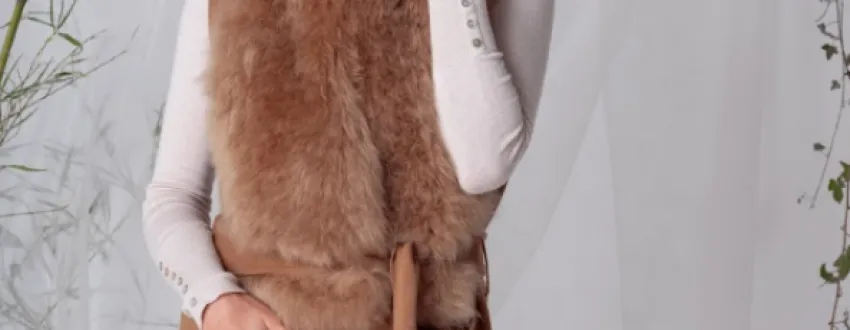
Its design versatility allows for experimentation with volumes, textures, layering, material combinations, and structural lightening.
Today, the vest is no longer interpreted solely as a winter garment, but as a key element in constructing a look, capable of harmonizing with knitwear, technical fabrics, leather, and denim.
The choice of material and construction deeply influences the final result: fluid surfaces, dramatic volumes, or deconstructed textures allow for the development of products suited to very different stylistic languages.
A versatile piece bridging fashion, layering, and experimentation
In the contemporary fashion landscape, the vest is often used as an element of layering, capable of adding depth and texture to the silhouette without weighing down the look’s structure.
Compared to traditional outerwear, the vest offers greater creative freedom: it can be deconstructed, reversible, oversized, minimalist, or feature more dramatic details.
This flexibility makes it particularly suited to contemporary collections, where material research plays an increasingly central role.
The most modern versions alternate between compact and lightweight surfaces, soft volumes, long and flowing textures, and inserts combined with fabric or leather.
Materials and stylistic identity
In contemporary vest design, the material determines not only the garment’s aesthetics but also its behavior in terms of movement, fit, and visual perception.
More fluid and lightweight textures allow for the creation of minimalist and sophisticated garments, while bulkier materials help create striking silhouettes designed for highly recognizable fashion collections.
The brand’s stylistic direction also influences the choice: minimalist lines call for cleaner, more compact surfaces; statement collections favor volume and three-dimensionality; while urban luxury capsule collections frequently combine fur and technical materials.
In this context, the vest becomes an extremely versatile design tool, capable of adapting to different creative languages.
The importance of contemporary techniques
The evolution of techniques has profoundly transformed the way fur vests are designed.
Lightening techniques, perforation and bonding now allow for garments that are softer, more dynamic, and easier to wear than traditional constructions.
Among the most commonly used techniques in contemporary luxury collections are perforations to reduce weight and structure, geometric patchwork, custom dyeing, smooth or textured surfaces, and multi-material combinations.
These techniques allow for a contemporary reinterpretation of fur, moving away from the classic idea of a heavy, structured garment.
The vest in luxury capsule collections
One of the factors that has driven the vest’s resurgence is its strong adaptability to capsule collections.
Thanks to its more compact size compared to a full coat, the vest allows for experimentation with new textures, special finishes, color combinations, creative inserts, and fashion-forward silhouettes.
For this reason, it is frequently included in seasonal collections, limited-edition productions, fashion collaborations, street luxury capsule collections, resort collections, and après-ski lines.
The vest also allows for the enhancement of the raw material without compromising lightness and wearability—characteristics increasingly sought after in contemporary luxury.
Between craftsmanship and stylistic innovation
In the premium sector, the fur vest today represents a balance between artisanal craftsmanship and aesthetic experimentation.
The garment’s construction requires careful attention to volume, proportions, material combinations, structural lightness, and surface finish.
Every detail contributes to defining the final character of the product, transforming the vest into a distinctive element within the collection.
From the most minimalist interpretations to the most dramatic versions, the vest thus continues to evolve as a key piece in contemporary luxury fashion, capable of combining innovation, functionality, and stylistic identity.